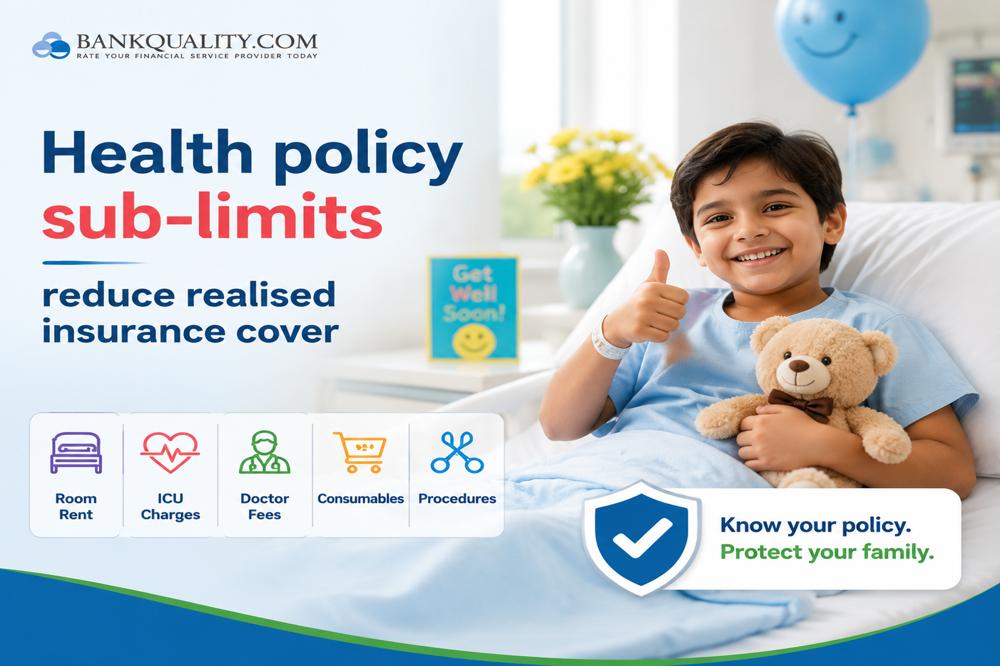
A health policy advertising $25,000 of cover rarely pays $25,000 on a claim, internal sub-limits cap room rent, intensive care, named procedures and consumables at fixed amounts per day or per claim, with the unfunded balance falling on the household.
Medical inflation across emerging markets is widening the gap between headline health insurance cover and realised payouts, as sub-limits embedded within retail policies shift more treatment costs onto households during claims.
A policyholder in Mumbai holds a retail family health insurance policy with a sum insured of INR 1 million (approximately $10,587). After a three-day intensive care stay following a road accident, the hospital bill totals INR 720,000 ($7,600). The insurer settles INR 480,000 ($5,067). The remaining INR 240,000 ($2,533), almost a quarter of the headline cover, falls on the household. The reason is not a clinical denial but a structural one: a sub-limit cap on intensive care charges per day, a separate sub-limit on consumables, and a percentage-based room rent cap.
According to the Insurance Regulatory and Development Authority of India, Annual Health Insurance Statistics 2024-25, sub-limit-related disputes account for a meaningful share of complaints in retail health insurance. According to the IAIS Application Paper on Conduct Issues in Insurance, 2024 update, structural caps inside policies remain among the least-disclosed product features at the point of sale globally. The headline sum insured is what the consumer sees. The sub-limits are what the insurer pays.
Sub-limits convert a single sum-insured number into a schedule of caps
The sum insured on a health policy is the maximum amount the insurer will pay across the policy year. It is typically the headline number used to advertise the product. Inside that headline, however, retail health policies in most emerging markets carry internal sub-limits, caps on specific claim categories that bind below the headline figure. The household pays the difference when a claim category hits its cap.
The most common sub-limit categories include room rent, intensive care unit charges, doctor’s consultation, ambulance, consumables and named procedures such as cataract surgery or knee replacement. A room rent capped at a percentage of sum insured per day translates into a real ceiling on the room category the policyholder can occupy without proportionate deductions on other claim items. A cataract sub-limit caps the procedure regardless of the headline cover.
The policyholder in Mumbai with a sum insured of INR 1 million (approximately $10,587) and a policy that includes a 5% room rent sub-limit per day can occupy a room costing INR 50,000 ($529.32) per day without deductions. A higher room category, common in private hospitals across most metros, leads to proportionate deductions across other claim categories under the policy’s terms. The sum insured does not change. The realised cover does.
The pattern is not unique to one market. Retail health policies in many regulated markets across South Asia, Southeast Asia and Latin America include sub-limit structures of varying scope. According to the IAIS Application Paper on Conduct Issues in Insurance, 2024 update, structural caps inside policies remain among the least-disclosed product features at the point of sale globally. Practices vary by insurer and policy type, with some products marketed as without sub-limits carrying premium loadings that reflect the broader cover.
The household experience plays out at the point of claim. A hospital bill and insurer’s settlement letter arrive. The gap between the two is the sub-limit cost. The household pays the gap from non-insurance funds, savings, family loans, household credit, asset sales, at the moment those resources are most stretched.
Policyholders can read the sub-limits schedule before they need to claim
The schedule lists each capped category and the corresponding cap, expressed either as a percentage of sum insured per day, an absolute monetary amount, or a percentage of the total claim. The document typically runs to two or three pages within the policy wording.
Comparing the sub-limits across two otherwise, similar policies can reveal that one product offers materially better cover at the point of claim, even when the sum insured and premium look comparable. Two policies advertising the same INR 1 million ($12,000) cover may behave differently when the room rent cap on one is INR 5,000 ($52.94) per day and on the other is INR 15,000 ($158.80) per day.
Some products are marketed as no sub-limits or with restoration of sum insured, variations that change the realised cover materially. Practices vary by insurer and market. Reading the actual policy wording, rather than the brochure, clarifies what the household is buying.
Adding a top-up or super top-up policy is a structural option used by households across India, the United Arab Emirates, Indonesia and other emerging markets where retail health products dominate. Top-up policies provide additional cover above a deductible threshold and frequently carry their own sub-limit structures. Practices and pricing vary materially.
Reviewing the policy at each annual renewal, specifically the sub-limits schedule alongside the sum insured, identifies whether the realised cover continues to match the household’s risk profile as healthcare cost inflation outpaces general inflation. According to the Aon Global Medical Trend Rates Report, October 2025, medical inflation across emerging markets averaged 11.3% in 2025. A policy whose sub-limits have not increased over multiple renewals provides materially less real cover today than when it was first issued.
The sum insured is the ceiling, not the floor
A retail health policy is sold on its sum insured. It pays on its sub-limits. The two numbers are part of the same contract, written in the same document, available at the same moment. The household that reads only the first lives with the second at the moment of claim. The household that reads both can compare products, choose accordingly, and avoid a gap between expectation and outcome at the moment cover matters most.
Don’t hesitate anymore! Now, at BankQuality, Talk it all out with a relaxed mind about the services, behaviour and products of your banks! Review and Rate your Bank TODAY! #TalktoBQ — www.bankquality.com